
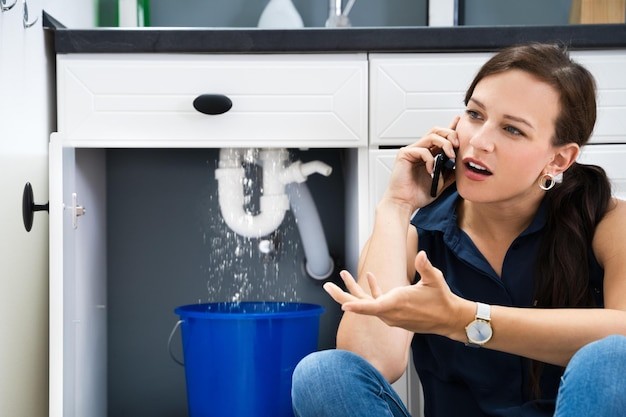
Think of your home’s plumbing as its circulatory system. When a pipe begins to fail, it isn’t just a minor inconvenience; it’s a direct threat to the “health” of your property. While a leaking tap might seem like a simple fix, it often signals a pressure imbalance that can lead to a catastrophic burst. In 2026, the City of Hamilton implemented a 7.32% water rate increase, making undetected leaks more expensive than ever. Every drop wasted is literally money down the drain. To protect your home, you need to look beyond the surface and address the root causes of failure that typical DIY videos miss entirely.
Table of Contents
- The Silent Erosion: How Hamilton’s Geology Affects Your Pipes
- The “Mechanical Debt” of Hamilton’s Historic Districts
- Hydrostatic Pressure: The Physics of Why Pipes Burst
- Beyond the Wrench: Smart Diagnostics for 2026
- Frequently Asked Questions
The Silent Erosion: How Hamilton’s Geology Affects Your Pipes
Hamilton sits on a limestone-rich landscape. As our water travels from Lake Ontario through municipal mains, it picks up dissolved minerals like calcium and magnesium. With hardness levels consistently hitting 140 to 160 mg/L, our water is classified as “hard.” Inside your pipes, these minerals don’t just sit still; they bond to the pipe walls, creating a rough internal surface. This “scale” narrows the passage for water, forcing your pump to work harder and increasing the internal friction. Over time, this friction leads to “pitting,” where the pipe walls thin out until they eventually pinhole. A professional plumbing repair in Hamilton doesn’t just patch the hole; it addresses the mineral buildup that caused the erosion in the first place.
The “Mechanical Debt” of Hamilton’s Historic Districts
If you live in neighborhoods like Westdale, Durand, or Corktown, your plumbing is likely carrying “mechanical debt.” Many of these homes still feature original cast-iron sewer stacks or galvanized steel supply lines.
- Galvanized Decay: These pipes rust from the inside out, often looking fine on the exterior while being nearly choked shut on the interior.
- Lead Concerns: Older joints were often sealed with lead solder. As these age, they become brittle and prone to “stress fractures.”
- Bellied Lines: Shifting soil in Hamilton’s lower city can cause sewer lines to “sag,” creating pools of stagnant water that catch debris and lead to recurring backups.
- Modern Mismatch: Trying to connect new PEX lines to old galvanized fittings without a proper dielectric union can cause “galvanic corrosion,” where the two metals eat each other alive.
Hydrostatic Pressure: The Physics of Why Pipes Burst
Most people assume a pipe bursts because it’s “old.” In reality, it’s usually because of a surge in hydrostatic pressure. When you suddenly turn off a faucet, the kinetic energy of the moving water has nowhere to go, creating a “water hammer.” In industrial settings, we use surge tanks to manage this. We bring those same high-level standards to residential industrial plumbing services in Hamilton, installing water hammer arrestors and pressure-reducing valves (PRVs). Without these, your dishwasher and washing machine valves are under constant siege. By balancing the pressure across your entire system, we can extend the life of your fixtures by years.
Beyond the Wrench: Smart Diagnostics for 2026
We don’t believe in “exploratory surgery” for your walls. Instead of tearing through drywall to find a drip, we use non-invasive technology to see the invisible. We utilize infrared thermal imaging to track moisture plumes and acoustic sensors that “listen” for the sound of pressurized water escaping. This data-driven approach allows us to pinpoint the exact location of a leak before we even take a tool out of the truck. This precision saves you time, reduces restoration costs, and ensures that the repair is done correctly the first time.
The Sooner You Get the Plumbing Fixed- The Better it Gets
We believe that a house is only as strong as the systems that support it. When you’re facing a plumbing crisis, you don’t just want a guy with a wrench; you want a partner who understands the technical nuances of your home’s infrastructure. At The Hamilton Plumber, we take pride in being more than just a service provider. Whether you’re dealing with a midnight emergency or planning a system-wide upgrade, we are the team you can count on. Our goal is to make sure that when you call a plumber in Hamilton, you get a solution that stands the test of time.
Let’s get your home’s flow back to where it should be. Reach out to us today for a comprehensive system audit and experience the difference that professional precision makes.
Frequently Asked Questions
- Why does my water smell like rotten eggs?
This is often caused by sulfur bacteria in your hot water tank or a dried-out P-trap. If it’s in every tap, the issue might be with the municipal supply or a reacting anode rod in your heater.
- Can I use chemical drain cleaners on old Hamilton pipes?
We strongly advise against it. Those chemicals are exothermic; they create heat that can soften PVC or react with the rust in old cast iron, making a small leak much worse.
- What is a backwater valve, and do I need one?
A backwater valve prevents city sewage from flowing backward into your basement during heavy rain. In many Hamilton neighborhoods, the city even offers a subsidy for the installation.
- How long do copper pipes usually last?
Under normal conditions, copper can last 50+ years. However, in areas with high mineral content like ours, “pitting corrosion” can shorten that lifespan to 20-30 years if the water isn’t treated.
- Is low water pressure always a sign of a leak?
Not necessarily. It could be a clogged aerator, a failing pressure-reducing valve, or mineral scale narrowing the pipe’s internal diameter.