
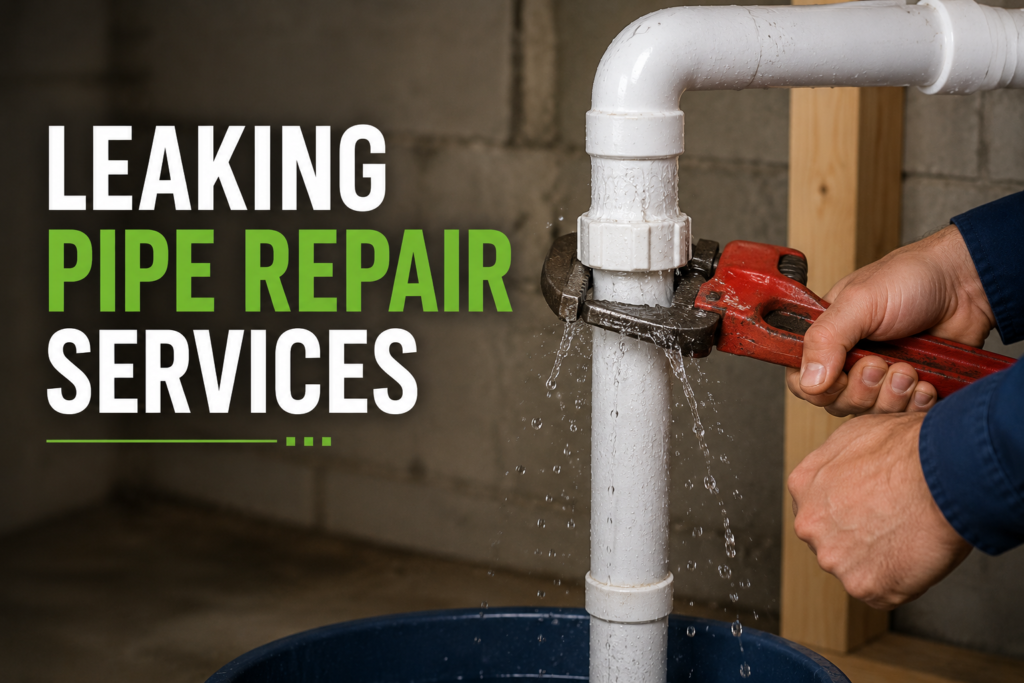
A leaking pipe rarely announces itself clearly. More often, it shows up as a damp wall, a higher-than-usual water bill, or a soft patch in the ceiling that keeps coming back. Leaking pipe repair services cover a wider range of situations than most homeowners expect, and knowing when to call a professional, and how fast to act, can make a significant difference in how much damage you end up dealing with.
Table of Contents
- Why Do Pipes Start Leaking in the First Place?
- What Are the Signs That a Pipe Has Already Been Leaking for a While?
- When Does a Leaking Pipe Become an Emergency?
- What Do Leaking Pipe Repair Services Actually Cover?
- How Does Emergency Water Line Repair Work on the Day?
- What Happens If You Leave a Pipe Leak Too Long?
- Staying Ahead of Pipe Problems in Hamilton
Why Do Pipes Start Leaking in the First Place?
Pipes don’t usually fail without a reason. In Hamilton, a few causes come up more often than others. Freeze-thaw cycles are a significant factor. When water inside a pipe freezes and expands, it puts pressure on the pipe wall from the inside out. Even a small fracture from one freeze event can go unnoticed until it widens over the following months.
Joint failures are also frequent culprits, especially where pipes have been modified or where older compression fittings have loosened over time. These tend to leak slowly and intermittently, making them harder to catch early. In some cases, high water pressure is the underlying driver. When supply pressure consistently runs above 80 PSI, it stresses joints and fittings over time and shortens the lifespan of the whole system.
What Are the Signs That a Pipe Has Already Been Leaking for a While?
This is the question most homeowners wish they had asked sooner. Slow leaks leave traces, but they’re easy to dismiss as minor issues until the damage becomes obvious. Common indicators include:
- A water bill that’s increased without a change in usage habits
- Discolouration or bubbling on drywall or plaster, especially near pipe runs
- Musty smell in a room that doesn’t have an obvious moisture source
- Soft or springy floor sections above a bathroom or kitchen
- Reduced water pressure at fixtures on a specific branch of the system
- Visible mineral staining or white crust around pipe fittings under sinks
Any one of these on its own could have another explanation. Two or more together points toward a slow pipe leak that’s been active for some time. The longer that pattern continues, the more material it damages along the way.
When Does a Leaking Pipe Become an Emergency?
Not every pipe leak is a middle-of-the-night situation, but some absolutely are. A supply line that’s under constant pressure from the municipal main can release a significant volume of water in a short time if it fails completely. A mystery leak that’s migrating through a wall and soaking into structural framing becomes an emergency the longer it goes unaddressed, even if it looks minor from the surface.
The threshold for calling an emergency plumber is fairly straightforward: if you can see water actively accumulating, if you’ve shut off the main and aren’t sure what to do next, or if the leak is near an electrical panel or outlet, that’s an emergency. Don’t wait until morning. Acting within the first hour of a visible pipe failure can prevent thousands of dollars in secondary damage to flooring, framing, and insulation.
What Do Leaking Pipe Repair Services Actually Cover?
Leaking pipe repair services are not limited to patching a visible crack. A proper repair starts with locating the actual source, which is not always where the water is showing up. Leak detection tools including acoustic sensors, thermal cameras, and moisture meters allow a plumber to trace water to its origin without tearing out walls unnecessarily.
Once the source is confirmed, the repair approach depends on the pipe material, location, and extent of damage. Options range from section replacement on accessible pipe runs to pipe relining for lines that are embedded in concrete or otherwise difficult to access physically. Full waterline replacement is sometimes the most practical solution when a supply line has reached the end of its serviceable life. A good plumber will walk you through the options and explain why one approach makes more sense than another given your specific situation.
How Does Emergency Water Line Repair Work on the Day?
Emergency water line repair follows a specific sequence. The water supply is isolated first, either at the main shutoff or at a branch valve closer to the problem. The affected area is then accessed, whether that’s cutting a wall section, lifting a floor panel, or excavating around an exterior line. The damage is assessed, the repair is made, connections are pressure tested, and the system is restored to service before the job is closed.
Waterline repair and replacement in Hamilton covers the full scope of what’s involved, from single-point repairs to complete line replacements on older properties. If you’re unsure what your situation calls for, a diagnostic visit is the right starting point. A licensed plumber can tell you within the first visit whether you’re dealing with an isolated failure or a system that needs more comprehensive attention.
Staying Ahead of Pipe Problems in Hamilton
The practical takeaway is that leaking pipes get more expensive the longer they go unaddressed. Structural moisture damage, mould remediation, and flooring replacement all cost significantly more than the pipe repair that could have prevented them. The Hamilton Plumber handles leaking pipe repair across Hamilton, from straightforward fixes to complex waterline work. If something in your home doesn’t look or feel right, reach out through the contact page and get a clear answer on what you’re dealing with before it turns into something bigger.
Frequently Asked Questions
1. How do I find a leaking pipe that I cannot see?
A plumber uses acoustic listening devices, thermal imaging, and moisture meters to trace a hidden leak to its source without unnecessary wall removal.
2. Can a leaking pipe fix itself if I just monitor it?
No. Pipe leaks do not self-seal. Even a slow drip under pressure will widen over time and cause progressive water damage to surrounding materials.
3. What qualifies as an emergency water line repair situation?Active water accumulation you cannot stop, leaks near electrical systems, or any break in the main supply line qualify. Call a plumber immediately in these situations.
4. How long does emergency water line repair take?
Simple section repairs on accessible pipes can be completed within a few hours. More complex situations involving buried or embedded lines take longer and may require additional access work.
5. Does The Hamilton Plumber handle both supply line and drain line leaks?
Yes. Both supply side and drain side leaks fall within the scope of leaking pipe repair services offered by The Hamilton Plumber.